Category: Opinion

  • From Glowing Screens to Living Streets ,The Pause Revealed a music Buried in Memory

    From Glowing Screens to Living Streets ,The Pause Revealed a music Buried in Memory

    Aijaz baba

    The recent internet disruption brought with it an unintended yet profound social revelation .while many initially perceived the disruption as inconvenience,it paradoxically unfolded into an experiment  in collective psychology and sociology.It reminded us of what it means to live proximity,beyond the glow of screens and the distraction of endless notifications.

    From a psychological standpoint ,the interruption exposed our growing dependency on technology.The human brain , conditioned to constant digital stimulation, experiences withdrawal like symptoms in the absence of connectivity irritability , anxiety and restlessness,yet as the hours turned into days ,many reported a subtle recalibration ,deeper conversation at home ,a rediscovery of leisure activities and even an improved capacity of attention.This temporary disconnection ,then functioned  almost like a cognitive detox ,reducing digital fatigue and sharpening interpersonal sensitivity

    From a sociological perspective,the disruption revealed the double edged nature of technology.On one hand,the internet has expanded our social horizons ,connecting communities across distances .On the other ,it has also fragmented local ties, with families dining together yet living apart in their digital silos .The disruption created a reversal of this trend .Neighbourhoods long silenced by the glow of handheld devices, echoed once more with voices , children playing outside , neighbours exchanging stories ,and families rediscovering the rhythm of collective life .

    It would be simplistic to argue for the rejection of technology.The internet remains a critical infrastructure for communication, education and livelihoods . However,the episode underscores a vital sociological lesson .when overused , technology colonizes not just our time but also our relationship and identities.What unfolded during the disruption was a reminder that human beings are social animals who crave physical presence,eye contact and unmediated interaction..

    The challenge ahead lies not in abandoning technology,but in cultivating a psychological discipline and sociological balance ,a conscious choice to use digital tools without letting them displace the organic fabric of community Life .The internet blackout may have been accidental ,but it held up a mirror to our hyper connected yet socially disconnected age .Perhaps its greatest gift was not the restoration of networks but the restoration of conversations

    The author Aijaz Ahmad baba is a post graduate student of political science

  • Ali Shaida

    Ali Shaida

    A Poet Shaped by Tradition, Carving His Own Path

    Shamshad
    Kralwari

    In the ever-evolving realm of Urdu and Kashmiri poetry, Ali Shaida has emerged as a profound literary figure–
    “Kitni mehnat se banaya hai tabeeboun ne ise, neend aaye ya na…”
    (Doctors have worked hard to create this; whether sleep comes or not…)
    -a poet who does not merely echo tradition but engages with it, refines it, and ultimately reshapes it. His striking verses, steeped in philosophical depth and cultural resonance, bridge the wisdom of the great classical masters with the realities of contemporary existence. Shaida’s poetry has been recognized for introducing new themes and subjects, serving as a beacon for emerging poets and writers.His literary presence on platforms like Facebook and public readings further solidifies his influence in contemporary poetry.


    “Jaan jo jism odhay baithi hai khud kisi ki Qaba Samajhta houN
    Boond ban kar jo aankh se tapke lab pe aayi dua samajhta houN”
    (. I consider the soul that sits wrapped in the body as someone’s cloak. I consider myself a drop that fell from the eye onto the lips as a prayer, having spent my entire life here.)
    What sets Shaida apart is his rigorous engagement with poetic heritage. He is not just a creator—he is a student of poetry, deeply influenced by luminaries such as Mir Taqi Mir ,Mirza Ghalib, Allama Iqbal, , Sauda, Mehjoor, and Rasool Mir besides the poets of sufi order. His study of literary critique, particularly the works of Shamsur Rahman Farooqi, has sharpened his understanding of poetic structure, linguistic innovation, and thematic exploration. Yet, he does not confine himself to their shadows—he absorbs their wisdom and redefines it on his own terms.
    A Poet in Conversation with the Masters;
    Shaida’s poetic journey mirrors the timeless dilemmas of existential thought—the longing for meaning, the struggle against fate, and the search for self-definition. He too interrogates the burdens of human desire and says
    “Zamane ki bandishon mein qaid rehna hai abhi laazim.”
    (Being trapped in the constraints of time is still necessary.)
    His melancholic reflections resonate deeply with Mir Taqi Mir, whose poetry is rich with sorrowful self-exploration:
    “Dukhiyā sab sansār hai, sājan sab sansār.”
    (The whole world is sorrowful, beloved, the whole world.)
    Yet, Shaida’s engagement with Iqbal gives his verses an intellectual vigor, where philosophy and poetry intertwine—much like Iqbal’s call for spiritual awakening:
    “Khudi ko kar buland itna ke har taqdeer se pehle,
    Khuda bande se khud poochhay, bata teri raza kya hai?”
    Shaida, in contrast, frames human existence as a more fragile pursuit—one bound not just by ambition but by the inescapable weight of time.
    A Voice for Kashmiri Identity;
    Shaida’s poetry is not merely an intellectual exercise—it is also a cultural colourfulness, woven into the fabric of Kashmiri literary traditions. Like Mehjoor and Rasool Mir, his poetry speaks to the landscapes, the people, and the memories of his homeland. His verses, such as those in ”Najad Wanik Pot Aalaw” and ”Dard ki Deleez Tak”, preserve the linguistic beauty and emotional depth of Kashmiri poetry, ensuring that its voice continues to echo across generations.
    Shaida calls for poetic transformation, urging the younger generation to engage with literary tradition not as a relic but as a living force.
    The Necessity of Studying Masters
    What makes Ali Shaida’s poetic journey unique is his understanding that true artistic vibrancy stems from studying great poets before forging one’s own path. He does not simply emulate the classical masters—he sometimes challenges their legacy, reshapes their motifs, and introduces fresh perspectives. His engagement with Farooqi’s literary critique has given him a refined understanding of form, symbolism, and historical depth, ensuring that his poetry remains both intellectually rigorous and emotionally evocative.
    By absorbing the legacy ,Shaida does not confine himself to tradition—he expands it, making poetry a bridge between past and future. His verses serve as a testament to the necessity of engaging with literary giants, proving that poetry thrives when it is both studied and reinvented.
    Thus Ali Shaida’s poetry stands at the crossroads of tradition and innovation. His verses interrogate existence, preserve culture, and refine language, ensuring that Urdu and Kashmiri poetry remain dynamic, relevant, and intellectually enriching.

    1. On Existence and Mortality;
      “Zindagi ek sawal hai, jawab sirf khamoshi mein chhupa hai.”(“Life is a question, and the answer is hidden only in silence.”)
    2. On Creation and Destruction;
      “Har lafz ek aag hai, jo dil ke andar jalti hai.” (“Every word is a fire that burns within the heart.”)
    3. On Wisdom and Reflection;
      “Ilm ka dariya beh raha hai, magar hum sirf boondon se guzar rahe hain.”
      (“The river of knowledge flows, yet we pass only through its droplets.)
      He is not merely a poet of nostalgia—he is a poet of engagement, transformation, and evolution. While carving his own path, Shaida ensures that poetry remains not just a relic of history but a living, breathing force in contemporary literature.

    khol kar Naqshidaan ke dhagae
    “Zarah zarah zara samajhta houN.
    ( Knowing the key of the designer
    , I know all the threads of his design thus I consider everything as a tiny particle.).

  • Jealousy Culture in Professionalism

    Jealousy Culture in Professionalism

    Decency Has AppearedPraiseworthy Culture Prevails Everywhere?

    Mukhtar Ahmad Qureshi
    Mukhtar.qur@gmail.com +918082403001

    In a world where jealousy once poisoned professionalism, a new dawn of decency riseswhere praise replaces prejudice and character is finally celebrated over competition

    Kashmir the land of Sufi saints, serene landscapes and centuriesold traditions of hospitality and harmony is undergoing a silent transformation. Once admired for its compassionate people and noble professional ethics, it is now witnessing a concerning rise in what can be termed as a jealousy culture in professional spaces.
    While headlines may celebrate progress and slogans shout about praiseworthy values and professionalism the lived experiences of many honest workers tell a different tale one of growing insecurity, backbiting, and the fading fragrance of mutual respect.
    From Hospitality to Hostility.
    Traditionally Kashmiris have been known for their warmth. Guests were treated like family and professionals be they teachers, doctors, engineers or civil servants held one another in high regard. Their purpose was service, not selfpromotion. But over the yearsthat cultural core seems to be eroding.
    Now, when a colleague progresses through merit, instead of being congratulated he is quietly envied. A teacher innovating in the classroom is often mocked behind his back. A dedicated officer is questioned for being “too active.” It is as if doing your job well is an offenseand being average is the safest route.
    Jealousy Dressed as Professional Concern .
    In the modern workplacejealousy rarely shows up as open hostility. It wears the mask of concern, professionalism or institutional protocol. When a colleague gets a promotion, the whispers begin. “He must have connections.” When someone is appreciated publicly, someone else mutters, “He is doing it just for show.” This culture of indirect character assassination stifles growth and destroys morale.
    Jealousy does not just demotivate individuals it infects teams. Professionals start working to outshine each other rather than collaborate. Projects become battlegrounds of ego. Those who choose the path of truth and integrity are often left alone misunderstood, ridiculed, or sidelined.
    Honesty Becomes a Threat.
    There is a strange irony in today’s professional world. An honest person is no longer admired he is feared. His transparency threatens others’ manipulations. His punctuality becomes a benchmark that others feel uncomfortable matching. His refusal to gossip makes him an outsider. Thus, honesty, once a virtue has become a liability.
    This is not a vague generalization. Across institutions educational, governmental or private you will find talented individuals who are deliberately discouraged by those who feel threatened by their capabilities. Rather than inspire each other many professionals today engage in a subtle race of pulling others down.
    A Society That Does not Celebrate Its Best.
    One of the most tragic consequences of jealousy culture is that it kills excellence. When talent is not acknowledged, when dedication is not rewardedand when achievement is mocked what message are we sending to our younger generation? Why would a young professional strive for brilliance when mediocrity gets you comfort and brilliance gets you envy?
    A society that does not celebrate its best minds will soon be led by its most manipulative ones. This is not just a professional concern but a moral crisis.
    Praiseworthy Culture? Or Just Good Optics?
    Some may argue that decency and professional values are indeed growing workshops are being held, social media is filled with motivational messages and institutions are adopting codes of conduct. But is this real change or merely cosmetic?
    We must distinguish between performative decency and genuine culture. Genuine professionalism is not about polite emails or well dressed meetings. It is about creating a safe environment where colleagues uplift one another, where competition does not become crueltyand where teamwork is not just a word on a wall but a lived experience.
    If a place seems decent on the surface but suffocating underneath that is not progress. That is pretense.
    The Silent Sufferers.
    In every office, there are quiet warriors those who come early, work sincerely, help others and leave without seeking applause. These are the people who uphold the soul of professionalism. But sadly, they are often ignored. Their names do not appear in headlines, they are not invited to speak on stages and their voices are often drowned in the noise of flashy selfpromoters.
    It is time we start noticing these silent contributors and start building a culture that appreciates ethics over exhibition.
    Reclaiming the Lost Grace.
    If Kashmir is to reclaim its identity as a land of values, it must begin by cleansing its professional spaces. Schools must teach not only academic excellence but emotional intelligence. Workplaces must reward teamwork over individualism. Leaders must lead with humilitynot arrogance. And most importantly professionals must learn to celebrate each other’s success.
    Jealousy is not just a personal flaw it is a cultural cancer. Left unchecked, it can eat away the very fabric of a community. But fortunately, the cure exists it lies in empathyselfawarenessand sincere appreciation for others.
    Let us return to the roots of our civilization, where brotherhood was real, decency was not performative and professionalism meant serving with integrity. Let us create workplaces where admiration replaces envy and respect replaces rivalry.
    Only then can we truly say that decency has appeared and a praiseworthy culture prevails everywhere.
    We should learn to appreciate the real talent and dedication of others with sincerity and respect. Recognizing the efforts of our peers not only uplifts them but also creates a healthy and motivating environment. Talent should never be overshadowed by jealousy or ego. When we value others, we build a culture of encouragement and unity. Alongside appreciation, adopting a culture of forgiveness is equally important. Forgiveness frees us from grudges and promotes emotional healing. It allows people to move forward without bitterness. Such a mindset fosters brotherhood and strengthens mutual respect. In a world full of differences, empathy and acceptance can bind us together. Let us celebrate each other’s strengths and forgive each other’s flaws for a more peaceful and respectful society.
    (Writer is a Teacher, An Author and Columnist hails from Boniyar Baramulla and He Can Be Contacted on mukhtar.qur@gmail.com)

  • Rediscovering Purpose at Home: A Call to Build, Not Just Dream;

    Rediscovering Purpose at Home: A Call to Build, Not Just Dream;

    When Dr. Sohan Lal Koul my scholar friend,recently remarked, “America isn’t as remarkable as you think—why glorify it?” I paused. His words weren’t just a challenge—they were a mirror. I had often spoken of the United States with the wonder many of us inherit, as though its streets were inevitably paved with opportunity. But I promised him then: I would soon offer the other side of the coin.

    Around the same time, the World Happiness Index revealed a compelling truth—America’s rank had slipped noticeably. That sparked something deeper in me. Here in Kashmir, we’ve long understood what really matters. To hold a roof over one’s head—to have a place to call home—is not just comfort, it’s the essence of dignity. Other things are secondary. This we say ” Saire waaw tchali Adam daie waaw ne”

    So I turned my gaze westward—not to romanticize, but to investigate. I asked: what is the situation of housing in a country like America? What I found was startling. And I felt it worth sharing with you all.
    Homelessness: A Global Challenge with Universal Lessons.
    Homelessness, often considered an issue confined to developing nations, is alarmingly prevalent in developed countries as well. The recent data from the United States reveals a stark reality: over 771,000 people—23 out of every 10,000 Americans—experienced homelessness in January 2024, an 18% increase from the previous year. Such figures challenge the perception of prosperity and progress often associated with wealthier nations, highlighting the gaps in their ability to provide safety and stability for all citizens.

    The Stark Reality in the U.S.
    The sharp 32.5% rise in homelessness in the U.S. since 2022 underscores systemic failings in managing affordable housing, equitable healthcare access, and living wages. Among those affected, marginalized groups bear a disproportionate burden. For instance, Native Hawaiians and Pacific Islanders experienced homelessness rates over six times higher than the national average in 2024. Black and Hispanic communities, though forming smaller percentages of the national population, also accounted for a disproportionately large share of the homeless population.

    Further complicating the issue is the difficulty in accurately counting the homeless. Current methods, like the point-in-time counts conducted annually in January, often miss individuals living in cars, temporary arrangements, or rural areas with inadequate infrastructure. As a result, the true extent of homelessness might be far greater than the official statistics suggest.
    Solutions for Developed Nations
    Addressing homelessness requires a multifaceted approach. Proven methods like the Housing First model, which prioritizes providing permanent shelter without preconditions, have shown significant success in countries like Finland. Coupled with initiatives to develop affordable housing, integrate healthcare and job training, and improve data collection techniques, such approaches can create lasting change.
    Innovative solutions, such as repurposing decommissioned buses into shelters or constructing modular homes, can provide immediate relief, while policy reforms addressing rent control, wage stagnation, and social safety nets tackle the root causes of homelessness. Community-driven programs and public-private partnerships also play a critical role in empowering individuals to regain stability. Let’s have a look on home front in comparison.
    India’s Own Strides: The Awas Yojanas
    While developed nations grapple with homelessness, India offers a unique perspective through its long-running efforts under the Pradhan Mantri Awas Yojana (PMAY). Launched in 2015 with a vision of “Housing for All,” PMAY has achieved notable success, delivering over 88.22 lakh homes under its urban component and ensuring inclusivity by prioritizing economically weaker sections, women, and marginalized groups.
    However, challenges persist. Land scarcity, particularly in urban areas, delays project completion, while houses built on city fringes often lack adequate infrastructure and connectivity. In some cases, quality concerns and exclusion errors in identifying beneficiaries have undermined the scheme’s impact. That is a separate issue.
    Bridging the Gaps
    Learning from both India’s successes and the challenges faced by developed nations, several steps can enhance the effectiveness of housing initiatives globally:

    • Integrated Development: Housing projects must be paired with infrastructure for education, healthcare, and employment opportunities.
    • Innovative Funding and Land Use: Incentives for private developers and innovative use of urban land can address shortages.
    • Efficient Processes: Digitizing approval systems and streamlining land acquisition can reduce delays.
    • Regular Monitoring: Ensuring quality through stricter checks and engaging local communities in oversight can improve outcomes.
    • Data-Driven Decisions: Accurate and inclusive data collection can ensure resources are directed to those most in need.
      A Universal Call to Action
      The data on homelessness, whether from the U.S. or India, underscores a universal truth: the worth of a society lies in how it treats its most vulnerable members. Homelessness is not an inevitable condition but a result of systemic gaps and policy failures. By addressing these gaps with compassion, innovation, and inclusivity, nations can create a future where everyone has a place to call home.
      This stark juxtaposition of developed nations struggling with homelessness and India’s proactive housing initiatives offers invaluable lessons for the world. It reminds us that the journey toward equity and dignity begins with a roof over one’s head—a basic human right that every society must prioritize. That is why the Supreme Court of India in a landmark judgement said ” A house is not just a property it is the shelter of the whole family …..The powerful reflection on the sanctity of home and shelter was ” The construction of a house has an aspect of socio-economic rights. foe’r an average citizen,the construction of a house is often the culmination of years of hard work,dreams,and aspirations ” How lucky we are than those of dreamers who spent their lives wandering to get a space for resting in developed countries.

  • November Session and Exams: A Race Against Time

    November Session and Exams: A Race Against Time

    The Author is a Motivational Speaker/ Weekly ‘Education Quill’ Associate Editor Working as Sr. Edp head at DD Target PMT Kashmir the Reputed institute For Medical/JEE /Foundation, coaching classes and can be reached at akhoon.aubaid@gmail.com
    Aubaid Ahmad Akhoon
    akhoon.aubaid@gmail.com

    When the structure of time is altered, the responsibility to adapt must be matched with support, not silence.


    In recent years, our educational system has seen multiple reform efforts, but one of the most talked-about is the restoration of the October–November academic session by the current government under the leadership of Chief Minister Omar Abdullah. This session structure had existed for years before being altered by the previous LG-led administration, in order to implement “Uniform Academic Policy” which shifted it to March. Now, with the return of an elected government, the earlier session has been promptly reinstated. While the move is intended to provide relief from harsh winters and better align with the national academic framework, its abrupt implementation has surfaced several challenges that demand immediate and thoughtful intervention.

    This shift, although welcome in spirit, has brought both convenience and complication. The current academic year will now span barely 6 to 7 months. In such a short duration, completing the entire syllabus has become an overwhelming task for students and teachers alike especially in demanding streams like medical/JEE where even 10 to 11 months often fall short. Coaching centres, already packed with back-to-back batches, are struggling to compress months of content into mere weeks.

    With school hours now running from 9:00 AM to 3:00 PM, and coaching centres starting their sessions post 3:00 PM until 7:00 PM, the day has become incredibly hectic for students. Coaching centres can’t function during school hours, and thus, the learning time outside formal schooling is significantly restricted. Students now shuttle between two learning spaces, barely getting time to rest or reflect, let alone revise. With classes starting late in the afternoon and stretching into the evening, one wonders how meaningful instruction can truly be delivered in such a crammed schedule.

    The Way Forward for Students

    To cope with this transition, students must now think smart and act smarter. It’s no longer sufficient to rely solely on offline classes. A hybrid approach leveraging both online and offline resources can empower students to not just keep up with the syllabus but also secure adequate time for revision. Access to recorded lectures, digital notes, mock tests, and doubt-clearing sessions can greatly ease the pressure on young minds.

    A Call for Government Schools to Modernise


    The time has also come to revamp government schools. It’s unfortunate that despite having qualified staff, thousands of students prefer private schools. The reason is simple: outdated infrastructure, passive teaching methods, and lack of accountability.
    If we truly want government institutions to thrive, they must embrace modern education systems. From smart classrooms and interactive labs to extracurricular development and life skills training, every element of the schooling experience needs a 360-degree upgrade. In line with competitive demands, subjective assessments must be supplemented with OMR-based testing to prepare students for national-level exams.


    Responsibility of the Directorate of Education


    The Directorate of Education must not wait for a crisis to take action. Teachers need to be trained and motivated to conduct extra classes both online and offline. Incentivising their involvement and recognising their contribution can breathe new life into the teaching community. If we expect miracles from teachers, we must empower them with tools, training, and trust.

    The Bigger Picture: Beyond Session Changes


    But let’s not stop at calendar reforms. Our education system today is a patient showing signs of chronic illness. We’re churning out batches of degree holders replete with theoretical information but lacking in practical life skills. Graduates roam the streets with files and resumes, while the job market remains indifferent to their qualifications.

    We must ask ourselves: What good is a degree that can’t help a youth stand on their own feet? What use is education that fails to instil dignity through self-reliance?
    It’s concerning that many degree-holding graduates remain unemployed or underemployed, while those with practical skills often thrive economically. This isn’t to undermine any profession, but rather to highlight a fundamental flaw in our education system. We continue to focus heavily on theoretical knowledge while ignoring the real-world skills that today’s job market demands. It’s time our curriculum reflects the needs of the 21st century by integrating vocational training, digital literacy, entrepreneurship, communication skills, and financial awareness—so students are not just educated, but truly empowered to build their futures.

    Time to Look Beyond Books


    We are far behind the pace of the modern world. While the globe is experimenting with AI, robotics, green technologies, and futuristic careers, we are still caught up in rote learning. There’s a dire need to introduce students to diverse fields—sports, media, cinema, IT, agriculture, environmental sciences, and business innovation.
    If a child is gifted in sports, let that talent be nurtured alongside academics. If someone dreams of being an artist or an app developer, let them find mentors and platforms from school itself. Education must not produce passive job seekers but proactive job creators.

    The Crisis of Morality


    More than ever, education must go beyond textbooks and technology it must nurture character. We don’t just need professionals; we need principled individuals. A nation’s strength lies not only in its infrastructure, but in the integrity of its citizens. If our students emerge academically brilliant but morally disconnected, we risk building a future without a foundation.
    Educational institutions should be more than examination factories they should be spaces where integrity is instilled, empathy is encouraged, and social responsibility is shaped. Values like honesty, respect, cultural pride, and compassion must not be sidelined they must be central to the curriculum that shapes our next generation.

    A Time to Awaken


    The world has moved light-years ahead, but we still walk the path with a lantern. It is time for a complete overhaul:
    Revise and update curricula with future-ready content.Train teachers continuously and empower them with modern tools. Introduce students to diverse skill sets beyond academics.
    Promote digital learning alongside physical classrooms. Restore values and ethics as a central part of education. Upgrade libraries, labs, and infrastructure across institutions. Create balance in daily schedules to avoid student burnout. Offer flexible, well-structured timelines to allow space for revision and mental health.
    And finally, let the school environment be one of openness—not a prison of pressure. Let children breathe, explore, and express. Let them make mistakes and learn. Because true education is not about suppressing voices but nurturing potential.

    Bottom line: Become More Aware
    Let us become more aware of what’s truly worth our time and energy. Reform is not a luxury—it is an urgent need. Let’s not wait for another batch of students to suffer under an outdated system. Change begins with awareness, and awareness begins with you.

     
    Shifting the session without shifting the system is like changing the clock without chasing the time. The real reform must begin beyond the timetable.

  • How to mitigate property damage due to natural catastrophe

    How to mitigate property damage due to natural catastrophe

    Sahil Manzoor
    Sahil Manzoor
    sahilmanzoor0401@gmail.com

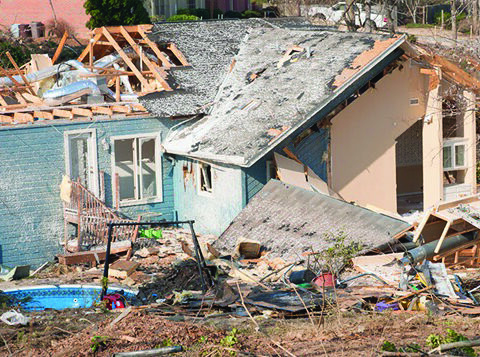
    Amidst Ramadan ul Mubarak, gusty winds damaged the property in the valley during the late hours of 27th March. Human beings are habituated to natural catastrophe and know how to be resilient to such disasters. But unfortunately, knowing and keeping courage is not good enough for the downtrodden class of the valley.

    In the Kashmir Valley, there are different seasons categorized on the basis of seasons. Valley can expect a number of natural catastrophes like avalanches, heavy snowfall, lashing rain, thunderstorms, lightning, and many more.

    What comes to me is that I start writing this write-up. Actually, in the Kashmir Valley, most of the population resides in villages where, in the 21st century, people lack basic facilities like roads, emergency services like fire and emergency, health services like ambulances and nearby primary health centers, road connectivities, etc.

    What I want to convey to administration in this regard is how we can mitigate such calamities.

    Calamity or catastrophe is certain and never comes before giving any sign it will be created at any moment, even in seconds.

    But one thing is very unfortunate: that we lose our properties; the underprivileged class is getting deprived of the shelters and suddenly coming under the open sky.

    How to mitigate the destructions due to such a natural catastrophe in the valley.

    We know, or most often the system can be created at any time. But we have to be aware and avoid unsafe construction of our homes, walls, and most importantly, rooftops. Gusty winds blow away the rooftops and can damage more assets.

    It should be mandatory to construct rooftops as per the geography of the area and consultations from experienced and highly qualified architects.

    Natural calamities take place mostly in upper reaches and where people construct homes without getting any consultation from concerned bodies, and such acts cost the government administration a huge amount in relief and disturbances.

    Suppose if government administration provides architect facilities on a little fee for experienced architects who can assist from beginning to end during the whole construction works, such an act may mitigate the loss of life and property of the people of the Kashmir Valley during natural calamities.

    Here in Kashmir we experience such incidents regularly and have fear of lethal consequences.

    It has been known for decades that the Kashmir Valley is coming under seismic zone 5; people have fear for tremendous jolts of earthquakes and make up their minds that almighty will make things better and safeguard us from such calamities.

    Government administrations have to take initiatives to grant relief promptly and warn people regarding such natural catastrophes.

    Awareness programs should be conducted at the panchayat level; people should be aware of the facts so that everyone can live fearlessly, and everyone must have the knowledge of how to mitigate and how to bounce back from such calamities.

    Post-2014 flash floods

    During inclement weather and on rainy days like the period from March to September, even the residents of the main business hub in the heart of the Kashmir Valley fear the flood threats. Such fear may impact their business strategies, and they fear bankruptcy and mental disturbance.

    We have to be habitual to living under such situations and have to be educated in such a field.

    Natural catastrophe and natural vegetation.

    We have a treasury of pir panjal forests; due to natural calamities, the natural vegetation was damaged on a large scale and needs alternatives like mass plantation drives. Fallen-off trees should be provided to the local underprivileged class on subsidiary costs. So that they never go for illegal deforestation activities.

    Popular trees should not be planted alongside the roadside, and high-tension wires should be installed properly in all corners of the valley so that untoward incidents should be minimized and damage to property and loss of life are minimized.

    May Allah safeguard us and protect us from all evil eyes. Ameen